
Choosing druid names is different from picking an ordinary fantasy name, because a druid name should sound as though it grew slowly, like a tree, rather than being invented in a hurry. The best ones carry the quiet of a grove, the patience of someone who watches seasons turn, and the knowledge of someone who learns from plants, water, stone, and sky. Whether you are naming a character for a story, a tabletop game, or a roleplaying world, the right name can tell a reader or a fellow player a great deal before that character ever speaks.
Real druids were not wizards locked in towers. In the Celtic world of Gaul and Britain, with later Irish literature preserving druid figures, druids formed a learned class: judges, teachers, healers, astronomers, poets, and keepers of memory in cultures that passed much of their knowledge by voice rather than by writing. Sacred groves mattered to them, oak trees carried special respect, and the turning year shaped ritual life. That history gives this list its shape. You will find tree names, herb names, seasonal names, river and stone names, animal companions, and names for keepers, singers, healers, and wanderers.
This guide separates what is genuinely old from what is newly made, so you never have to guess. A small section explains real Ogham tree letters, which are attested Old Irish words. Everything else in the collections is presented as an original creation suited to the theme, not as an ancient word with a hidden meaning. Use the lists to find a name that fits your character’s work, home, temperament, and season, and use the later build-your-own guidance to craft a name that still feels personal after the first reading.
Table of Contents
- Quick Picks
- What Druids Really Were
- How to Use This List Honestly
- Trees and Groves
- Real Celtic Roots: Ogham Tree Letters
- Seasons and Festivals
- Water, Stone and Sky
- Animal Companions
- Roles and Circles
- How to Choose the Right Druid Name
- Invent Your Own Druid Name
- Names and Patterns to Avoid
- Druid Names for Stories, Games and Play
- FAQs
- Conclusion
- Final Thoughts
Quick Picks
These ten favourites cover the whole spirit of the list in miniature: woodland, water, herbs, birds, and open sky, without leaning on the same tired fantasy words. Each one works as a complete character name on its own, and each one suits a druid who belongs outdoors.
| Name | Why it works |
|---|---|
| Oakenwold | Suits a patient old-grove guardian |
| Mossglen | Fits a soft-spoken damp-valley dweller |
| Elderbrook | Works for a calm stream-side healer |
| Acornvale | Suits a hopeful young grove keeper |
| Thistledown | Fits a light-footed wandering herbalist |
| Lichenfield | Works for a slow, observant stone watcher |
| Sorrelbrook | Suits a sharp-eyed kitchen-garden healer |
| Wrenwood | Fits a small, bright woodland singer |
| Briarwood | Works for a protective thorny-boundary keeper |
| Sycamore | Suits a broad, generous shade giver |
What Druids Really Were
Historians know druids mainly through later writing, archaeology, and Irish and Welsh literature written long after the Iron Age, so honest accounts leave gaps rather than filling them with invention. Roman writers described druids as learned figures, and later Irish tradition remembers them as poets, judges, and advisers to kings. Their learning was carried in memory, and training was said to take many years. A name drawn from this world should therefore feel learned and rooted, not merely magical in a vague sense.
Unlike the warlock tradition, where power often comes through a bargain with another being, a druid’s power in both history and modern fantasy usually grows from attention: attention to plants, to weather, to animals, and to the health of a community. That distinction matters for naming, and readers can compare the contrast in warlock names to feel how different the two traditions sound. A druid name built from a grove, a herb, or a river suggests study and stewardship, while a bargain-born name suggests secrecy and debt.
Sacred places also shaped druid identity. Groves, springs, hilltops, and clearings served as meeting and ritual places, and seasonal festivals marked the pastoral year: the winter opening marked by Samhain, the spring quickening of Imbolc, the summer fire festival of Beltane, and the harvest festival of Lughnasadh. A character tied to one of those turning points can carry a seasonal name with real weight, provided the name is treated as an evocation of the season rather than a claim about an ancient personal name.
Finally, druids were not only priests. They settled disputes, remembered genealogies and law, advised rulers, and healed the sick with plant knowledge. That breadth is why this list includes keepers and singers alongside wild wanderers. A druid character can be a village healer, a travelling judge, a keeper of a sacred well, or a guardian of a forest boundary, and the name should hint at which kind of work that character does.
How to Use This List Honestly
Two kinds of names appear below, and keeping them apart protects both your story and your reader. The Ogham section uses real Old Irish tree words that survive in the early medieval Ogham alphabet, where each letter carries a tree association. Those entries are historical words, not modern inventions. Every other collection entry is an original compound created for this guide from English nature words, and its short note describes the kind of character it suits, not a secret ancient meaning.
That honesty also helps you choose better. When a note says a name suits a healer or a boundary keeper, it is offering a storytelling suggestion, not a dictionary definition. You are free to use the name for the opposite kind of character if the contrast serves your story, but starting from a clear suggestion usually produces a more believable character than starting from a random syllable string.
Read each candidate aloud, say it in a sentence of dialogue, and try it next to the character’s title or circle name. A good druid name survives plain speech. If it only sounds impressive when whispered dramatically, it will wear thin across a whole novel or campaign.
Trees and Groves
Trees are the natural starting point for a druid, and not only because oak was honoured. Different trees suggest different characters: a yew suggests endurance and quiet, a willow suggests flexibility near water, a beech suggests a place where knowledge is kept, and a hawthorn hedge suggests a boundary that should not be crossed lightly. Pick the tree that matches the character’s temperament, not simply the tree that sounds grandest.
Ancient Woodland Keepers
| Name | Why it works |
|---|---|
| Oakenshaw | Suits a steadfast ancient-woodland protector |
| Beechwarden | Fits a keeper of written grove lore |
| Yewshade | Works for a grave, enduring churchyard guardian |
| Ashenford | Suits a tall, straight river-crossing guide |
| Elmsworth | Fits a village-green elder and mediator |
| Chestnutvale | Works for a generous autumn-food provider |
| Hazelbrook | Suits a quick-witted hazel-coppice keeper |
| Pineshaw | Fits a high, resin-scented ridge dweller |
| Cedarglen | Works for a fragrant, sheltered-valley healer |
| Willowsong | Suits a gentle water-side singer |
| Birchwood | Fits a bright new-growth pioneer |
| Sallowbrook | Works for a damp-meadow basket weaver |
| Junipervale | Suits a hardy upland berry gatherer |
Undergrowth, Herbs and Healing
A healer’s name should feel practical. Herb lore was everyday work: gathering at the right time, drying leaves correctly, knowing which plant soothes and which plant harms, and remembering who in the village needs what. These names suit characters whose magic looks like skilled care rather than spectacle.
| Name | Why it works |
|---|---|
| Mugwortfield | Suits a dream-wise travelling herbalist |
| Vervainfield | Fits a protective household-healing keeper |
| Chamomilebrook | Works for a soothing tea-making healer |
| Angelicawell | Suits a tall-garden medicine grower |
| Betonybrook | Fits a careful wound-herb keeper |
| Comfreyvale | Works for a bone-knitting village healer |
| Feverfewfield | Suits a fever-tending cottage practitioner |
| Meadowsweet | Fits a sweet-scented meadow gatherer |
| Woodruffvale | Works for a shaded-woodland scent keeper |
| Yarrowfield | Suits a battlefield herb carrier |
| Plantainbrook | Fits a humble wayside-wound healer |
| Selfhealvale | Works for a quiet self-reliant medicine keeper |
| Eyebrightfield | Suits a clear-sighted remedy maker |
| Motherwortbrook | Fits a mothering household-herb keeper |
Real Celtic Roots: Ogham Tree Letters
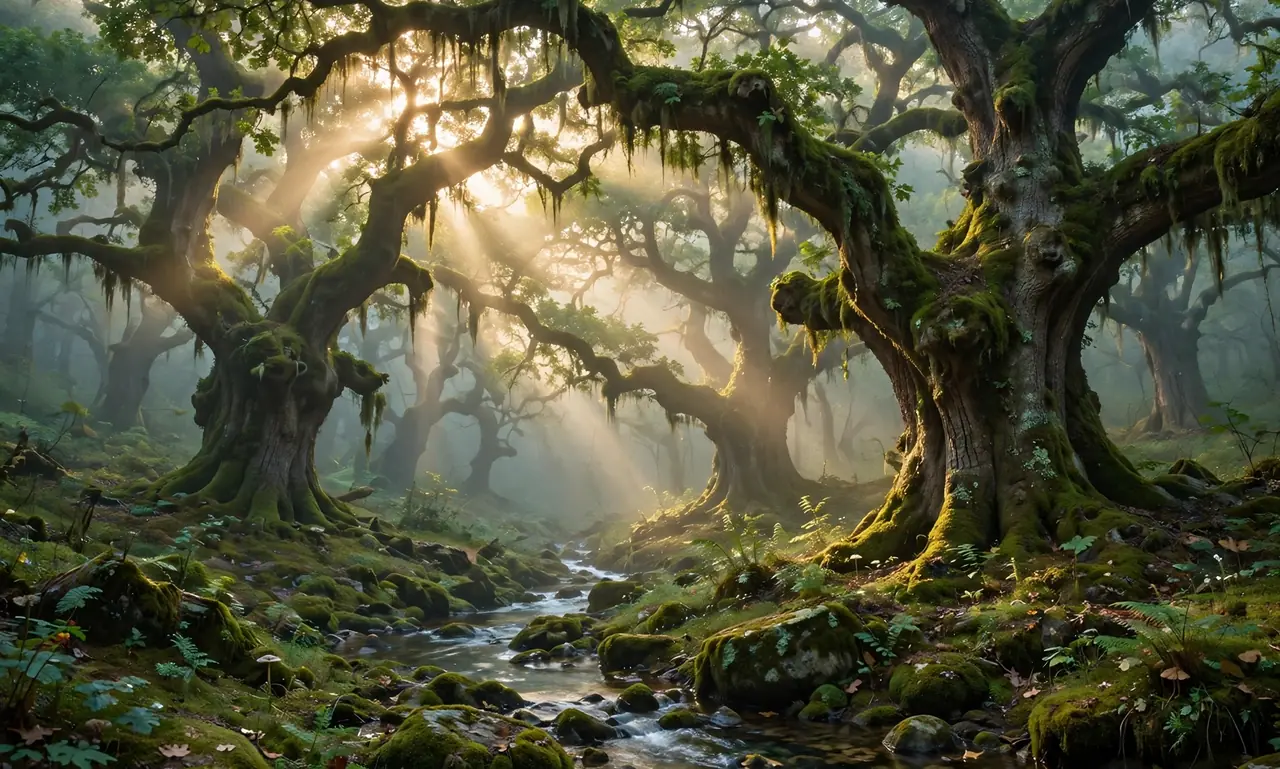
The Ogham alphabet, used in early medieval Ireland and parts of Britain, gives each letter a tree or plant association in later manuscript tradition. These are not personal names from the Iron Age, and they should not be presented as such. They are, however, genuine Old Irish words for trees and plants, which makes them excellent roots for a historically flavoured character, a grove name, or a title within a fictional circle.
For pronunciation of the great seasonal festivals, modern guides generally render Samhain roughly as SOW-in, Imbolc as IM-bolk, Beltane as BEL-tayn, and Lughnasadh as LOO-nah-sah. Festival pronunciations vary by region and by Irish, Scottish Gaelic, and Manx usage, so treat these as helpful approximations rather than a single correct form. The tree words below are given in their Ogham spellings, and their notes state only the traditional tree association.
Ogham Tree Letters
| Name | Traditional tree link |
|---|---|
| Beithe | Ogham letter linked with birch trees |
| Luis | Ogham letter linked with rowan trees |
| Fearn | Ogham letter linked with alder trees |
| Saille | Ogham letter linked with willow trees |
| Nuin | Ogham letter linked with ash trees |
| Huath | Ogham letter linked with hawthorn trees |
| Duir | Ogham letter linked with oak trees |
| Tinne | Ogham letter linked with holly trees |
| Muin | Ogham letter linked with vine plants |
| Gort | Ogham letter linked with ivy plants |
| Ngetal | Ogham letter linked with reed plants |
| Ruis | Ogham letter linked with elder trees |
Seasons and Festivals
A seasonal name places a character inside the year’s work at once. Spring names suit beginners, planters, and hopeful characters. Summer names suit characters at full strength. Autumn names suit harvesters, judges after the harvest, and characters carrying grief or wisdom. Winter names suit watchers, storytellers, and characters who endure. Choose the season that matches the character’s present chapter, not only the season in which the story begins.
Spring and Summer
| Name | Why it works |
|---|---|
| Primrosevale | Suits a gentle early-spring garden keeper |
| Bluebellbrook | Fits a blue-woodland spring walker |
| Cowslipfield | Works for a sunny pasture flower gatherer |
| Larkspurvale | Suits a tall summer-border gardener |
| Appleblossom | Fits an orchard-blossom season keeper |
| Midsummerwell | Works for a longest-day well guardian |
| Solsticewarden | Suits a turning-point ceremony keeper |
| Haymeadow | Fits a hard-working summer-field cutter |
| Vernalbrook | Works for a fresh spring-stream watcher |
| Buttercupfield | Suits a cheerful summer-pasture childminder |
Autumn and Winter
| Name | Why it works |
|---|---|
| Snowdropfield | Suits a brave late-winter flower watcher |
| Hollybrook | Fits a winter-green boundary keeper |
| Winterberry | Works for a bright cold-season provider |
| Barleyfield | Suits a steady harvest-grain keeper |
| Leaflitter | Fits a quiet autumn-forest floor walker |
| Bonfirewell | Works for a festival-fire and water keeper |
| Harvestwold | Suits a woodland harvest overseer |
| Mushroomglen | Fits a damp autumn-fungi gatherer |
| Pineconevale | Works for a seed-collecting winter preparer |
| Nuthatchbrook | Suits a busy tree-creeping winter birdwatcher |
Water, Stone and Sky
Druids in tradition are tied to more than trees. Springs and wells were places of healing and offering, stones marked boundaries and burial places, hills gave a view over a whole territory, and the sky gave the calendar through sun, moon, and stars. A character who guards a well, reads the sky, or keeps a stone circle needs a name from that element, not another tree name by default.
Rivers, Wells and Shores
| Name | Why it works |
|---|---|
| Springwell | Suits a clear-water healing-spring keeper |
| Tidepool | Fits a patient shoreline life watcher |
| Pebblebrook | Works for a small-stream stone sorter |
| Fordwarden | Suits a river-crossing path guardian |
| Lakeshore | Fits a still-water edge dweller |
| Estuaryvale | Works for a river-meets-sea keeper |
| Rainbrook | Suits a rain-fed stream watcher |
| Dewfield | Fits an early-morning meadow walker |
| Mistfield | Works for a low-cloud valley wanderer |
| Cloudberry | Suits a high-moor berry gatherer |
| Brookhaven | Fits a safe stream-side refuge keeper |
| Seawrack | Works for a storm-tossed shore gatherer |
Stone, Hill and Sky
| Name | Why it works |
|---|---|
| Graniteford | Suits a hard-rock river-crossing keeper |
| Flintfield | Fits a sharp-stone tool keeper |
| Chalkhill | Works for a white-downland hill watcher |
| Torwarden | Suits a rocky-tor summit guardian |
| Cairnfield | Fits a memorial-stone field keeper |
| Moonwort | Works for a moonlit-herb night gatherer |
| Starwort | Suits a star-chart plant keeper |
| Sunbeamfield | Fits a bright open-field sun watcher |
| Skylarkvale | Works for a high-singing meadow birdkeeper |
| Dawnfield | Suits an early-light field walker |
| Duskfield | Fits a twilight-boundary evening watcher |
| Twilightfield | Works for a between-light threshold keeper |
Animal Companions
Animal names work best when they describe a relationship, not a costume. A druid who watches badgers learns patience and night habits. A druid who follows otters learns rivers. A druid who listens to wrens learns small, exact songs. Choose the animal whose habits match the character’s daily work, and let the name suggest observation rather than domination.
Forest Animals
| Name | Why it works |
|---|---|
| Stagbrook | Suits a proud forest-stream watcher |
| Badgerfield | Fits a stubborn night-earth dweller |
| Otterbrook | Works for a playful river-bank swimmer |
| Foxfield | Suits a clever field-edge observer |
| Harefield | Fits a swift open-meadow runner |
| Dormousevale | Works for a sleepy hazel-thicket dweller |
| Hedgehogfield | Suits a prickly garden-boundary helper |
| Molefield | Fits an unseen soil-and-root worker |
| Squirrelbrook | Works for a busy nut-storing tree dweller |
| Pinemarten | Suits a shy pine-forest hunter watcher |
| Weaselbrook | Fits a quick hedgerow stream hunter |
| Volefield | Works for a small grass-tunnel dweller |
Birds and Water Creatures
| Name | Why it works |
|---|---|
| Owlfield | Suits a silent night-field watcher |
| Kestrelfield | Fits a hovering open-country hunter |
| Buzzardbrook | Works for a soaring stream-valley watcher |
| Heronfield | Suits a still shallow-water fisher |
| Kingfisherbrook | Fits a bright diving-stream fisher |
| Swanfield | Works for a graceful open-water dweller |
| Salmonbrook | Suits a upstream-returning river traveller |
| Troutfield | Fits a clear-stream fish keeper |
| Newtfield | Works for a pond-edge small-life watcher |
| Frogfield | Suits a damp-meadow chorus listener |
| Toadfield | Fits a slow garden-path dweller |
| Blackbirdfield | Works for a dusk-song garden singer |
Roles and Circles
A druid’s job can be the name itself. In a fictional circle, members might be known by their work rather than by birth names: one keeps the grove, another keeps the lore, another walks the boundaries. Role names also help a game group at a glance, because a new player can guess what the character does from the name alone. Keep the role honest to the character’s actual duties, or the name will feel like a costume that does not fit.
Keepers, Healers and Singers
| Name | Why it works |
|---|---|
| Grovekeeper | Suits a sacred-grove daily guardian |
| Circlekeeper | Fits a ritual-circle order keeper |
| Lorekeeper | Works for a memorised-knowledge guardian |
| Herbkeeper | Suits a medicine-garden careful keeper |
| Songkeeper | Fits a traditional-song memory holder |
| Seedkeeper | Works for a future-harvest seed guardian |
| Wellkeeper | Suits a healing-spring water guardian |
| Stonekeeper | Fits a standing-stone boundary guardian |
| Oathkeeper | Works for a sworn-promise witness keeper |
| Dreamkeeper | Suits a sleep-vision careful interpreter |
| Storykeeper | Fits a community-tale memory holder |
| Grovewarden | Works for a grove-boundary firm guardian |
Seers, Wanderers and Wild Ones
| Name | Why it works |
|---|---|
| Hedgewalker | Suits a hedgerow-boundary travelling seer |
| Moorwalker | Fits a open-moor solitary wanderer |
| Forestwalker | Works for a deep-woodland path finder |
| Nightwalker | Suits a moonlit-path night traveller |
| Dawnwalker | Fits an early-light road starter |
| Mistwalker | Works for a low-cloud valley traveller |
| Rootwalker | Suits an underground-root path follower |
| Thornwalker | Fits a thorny-thicket fearless traveller |
| Wildwalker | Works for an untamed-landscape free wanderer |
| Starwalker | Suits a night-sky guided traveller |
| Riverwalker | Fits a riverbank-route steady traveller |
| Waywarden | Works for a travellers-road safety guardian |
How to Choose the Right Druid Name
Start with the character, not the list. Write one sentence about what the character does each day, one sentence about where the character lives, and one sentence about the character’s greatest strength and greatest flaw. A name that fits all three sentences will usually survive the whole story, while a name chosen only because it sounds impressive will start to feel empty once the character faces ordinary problems.
Next, match the element to the work. A healer belongs with herbs and wells, a boundary guardian belongs with hedges, stones, and thorny thickets, a sky reader belongs with hills and stars, and a travelling judge belongs with roads, fords, and open moors. When the element and the work disagree without a reason, the reader feels the mismatch even if the name itself is pleasant.
Consider sound as well as sense. Short names are easier to call out in play and easier to remember in a novel, while longer compound names carry more atmosphere but need to be pronounceable at speed. Say the full name, then say it shortened as friends might say it, then say it in anger, in warning, and in grief. If it breaks in any of those tones, choose a simpler form.
Finally, check the company the name keeps. A forest archer and a druid can share a woodland party, yet their names should signal different crafts: one aims and hunts, the other tends and heals. Comparing candidates with archer names can sharpen that contrast, because the archer list leans toward aim, bow, and prey, while this list leans toward growth, care, and place. A druid who sounds like an archer has probably borrowed the wrong element.
Invent Your Own Druid Name
You can build an original druid name in four steps without copying anyone. First, choose one nature root from the character’s home: a tree, a herb, a river feature, a stone, a season, or an animal habit. Second, choose one second element that describes work or place: keeper, warden, walker, field, brook, vale, glen, or well. Third, join them and check the sound, removing a syllable if the result feels clumsy. Fourth, test the result against the avoiding patterns below, and change either element if the name drifts into generic fantasy territory.
The framework works because each part does separate work. The first part gives the character a home in nature, and the second part gives the character a job or a landscape to belong to. A name built this way can be entirely new and still feel at home beside older Celtic words, because it follows the same logic: a person named for what they tend and where they tend it.
Try the framework with three different roots for the same character before settling. A healer who begins with a herb root may end with a well root that fits better, and a wanderer who begins with a tree root may end with a road root that explains the travelling life more clearly. Keep the discarded versions in your notes, because they often suit secondary characters, places, or circles later in the same world.
Names and Patterns to Avoid
Avoid names that would fit a wizard, warrior, or rogue just as well. A single vague nature word with no druid work attached to it tells the reader nothing about the character, and it risks colliding with names in other fantasy lists. If the name would work equally well for a warrior, a thief, or a wizard with no change at all, it probably needs a more specific second element tied to groves, herbs, wells, or circles.
Avoid modern surnames, brand-like spellings, and joke spellings that break the world. A druid name should be able to sit beside a village name, a river name, and a festival name without looking like it came from a different century. Avoid also claiming a false history for a new name: do not attach an invented language, tribe, or ancient meaning to a compound you made this week, because readers who know the real languages will notice, and readers who do not know them will still sense the bluff.
Avoid overloading one character with too many elements. A name that tries to include a tree, a season, an animal, and a magical effect at once becomes a description rather than a name, and other characters will shorten it anyway. Choose the single strongest image, trust the story to supply the rest, and let the character earn depth through action rather than through a longer label.
Druid Names for Stories, Games and Play
In a novel, a druid name appears most often in narration and dialogue, so readability matters more than rarity. Give the reader a name that can be recognised at a glance on the page, and avoid two druid names in the same circle that start with the same sounds, because readers will confuse them in fast scenes. A short form or title used by friends can help, provided it does not replace the full name entirely.
In a tabletop party, the druid often fills the roles of healer, guide, and negotiator with the natural world, so a name that signals that work helps the whole table. A party that already includes a stealth specialist plays differently from a party built around open combat, and the contrast with ninja names shows why: stealth names favour silence and shadow, while druid names favour growth, patience, and place. Keep the two traditions distinct, and each character stays easier to play.
In a party with a sworn protector, the druid’s name should also stay distinct from the protector’s oath-bound sound. Readers and players can feel that difference when they compare a grove keeper with the kind of name found among knight names, where duty, armour, and allegiance dominate. The druid protects a place and a living community, while the knight protects a person, an oath, or a cause, and the names should preserve that distinction.
FAQs
What makes a name a good druid name?
Druid names work best when they sound rooted in nature, learning, and place, rather than sounding magical. A good druid name should suit the character’s work, home, and temperament, and it should sound natural when spoken aloud in dialogue.
Are druid names only for fantasy games?
No, druid names suit stories, novels, tabletop games, and roleplaying characters, and they also suit creative projects beyond games. Druid names carry a nature-rooted feeling that works wherever a wise, outdoors character belongs, whether in fiction, play, or naming inspiration.
Can druid names work for any gender?
Druid names in this guide are gender-neutral, because trees, rivers, seasons, and roles belong to no gender. Druid names can suit a male, female, or nonbinary character, and the character’s story, voice, and work matter more than any gendered ending.
Do druid names have real meanings?
Some druid names use real Celtic words, such as Ogham tree letters, while most are original creations. Druid names in these collections carry storytelling suggestions, not dictionary meanings, so never treat an invented compound as historical evidence.
How do I choose a druid name for DnD?
Start with the druid’s circle, home, and work, then choose a druid name from the matching section. Druid names feel strongest when the element matches the character’s spells and story, and when the name stays short enough for easy play.
What is the difference between druid names and wizard names?
Druid names usually grow from trees, herbs, water, stone, seasons, and animal life, while wizard names often suggest towers, books, and formal study. Druid names sound earthy, patient, and outdoors, even when the character uses powerful magic in the story.
Can I invent my own druid name?
Yes, druid names can be invented by pairing a nature word with a role or place word, as this invention section explains. Druid names you invent should stay pronounceable and theme-specific, and test every candidate aloud before settling on it.
Conclusion
The strongest druid names in this guide share a simple quality: they belong somewhere. A grove keeper belongs in a grove, a well keeper belongs beside water, a harvest overseer belongs at the edge of field and wood, and a wanderer belongs on a road between those places. When you choose from that sense of belonging, the name stops being decoration and starts doing storytelling work, reminding the reader what the character tends, protects, and loves.
For the historical background behind that sense of belonging, readers can start with the general history of the ancient learned class in Druid, which explains how little is securely known and why later literature must be read with care. Return to the lists with that caution in mind, pick the name that fits your character’s daily work, and let the story, not the label, prove the character’s wisdom.
Final Thoughts
Druid names work when they grow from a real place in your story: a grove worth guarding, a herb worth gathering, a well worth keeping clean, or a road worth walking in all seasons. Choose the name that fits your character’s work and temperament, say it aloud until it feels natural, and trust the character’s actions to give it weight. A well-chosen druid name will still feel right long after the first chapter, the first session, and the first harvest. Let the name grow with the character, changing its meaning as seasons pass and choices accumulate, rather than demanding that one word carry the whole story alone.
Pingback: 150+ Ninja Names So Stealthy They Vanish Fast
Pingback: 115+ Cute Island Names That Feel Instantly Cozy