
Choosing knight names is about more than labelling a character. A name tells the reader, before a single sword is drawn, what kind of person is walking into the scene. A name can promise courage, warn of stubborn pride, or quietly suggest a lifetime spent guarding a gate that nobody else wanted. That is why knight names still matter so much in stories, tabletop games, and roleplay, centuries after real knights rode across medieval Europe.
In the Middle Ages, a knight was a mounted warrior bound to service, to a lord, and often to a code of conduct that later writers called chivalry. A name carried reputation in a very practical way. It was announced at tournaments, painted on shields, sealed on letters, and remembered after battles. Modern writers borrow that weight for a different reason. When a character is introduced as a knight, readers expect honour, discipline, and a cause worth defending, and the name is the fastest way to set that expectation.
This guide takes a different path from a bare list. Every knight name below is an original creation, chosen for a clear job in a story or game. You will find names for courage, for guardianship, for long quests, for sworn orders, for heroines, for tournament champions, for castles and kingdoms, and for characters who need something short and strong. Read the notes, test the names aloud, and pick the one that fits the character you already have in mind.
Table of Contents
- Quick Picks
- A Short History of Knighthood
- Knight Names for Courage and Honour
- Knight Names for Guardians and Defenders
- Knight Names for Questing Heroes
- Knight Names for Oathbound Orders
- Knight Names for Heroines
- Knight Names for Tournament Champions
- Knight Names from Castles and Kingdoms
- Short and Strong Knight Names
- When and Why to Use Each Type of Knight Name
- How to Choose the Right Knight Name
- How to Invent Your Own Knight Name
- Knight Names to Avoid
- FAQs About Knight Names
- Conclusion
- Final Thoughts
Quick Picks
If you need a name right now, start here. These ten knight names cover the most useful character types, from the loyal gatekeeper to the hopeful patrol leader, and each one works with a title such as Sir, Dame, or Lady in front of it.
| Knight Name | Short Note |
|---|---|
| Halvard of the High Gate | Suits a loyal castle gatekeeper. |
| Serenna Dawnward | Suits a hopeful morning patrol leader. |
| Oswyn Bannerhold | Suits a steady standard-bearer in battle. |
| Kelden Oathkeep | Suits a knight who never breaks promises. |
| Marisol Towerwatch | Suits a vigilant coastal fortress defender. |
| Theron Plainswarden | Suits a rider guarding open borderlands. |
| Elowen Meadowguard | Suits a gentle protector of villages. |
| Corvin Hallward | Suits a disciplined castle household guardian. |
| Delmar Stonebridge | Suits a defender of river crossings. |
| Tamsin Lanternwatch | Suits a night-watch patrol leader. |
A Short History of Knighthood
Knighthood grew out of mounted warfare in medieval Europe. A knight needed a horse, armour, weapons, and training, which made knighthood expensive and closely tied to land and service. In return for land or pay, a knight owed military service to a lord, and over time that bargain hardened into a social rank with its own ceremonies, duties, and expectations.
The ceremony mattered because it made the rank public. A young warrior might train for years as a page and then a squire, learning horsemanship, weapons, household service, and courtly behaviour, before being dubbed a knight. The dubbing, the oath, and the gift of sword and spurs were not decoration. They announced that this person could now be trusted with arms, with command, and with the protection of people who could not protect themselves.
Military orders gave knighthood another shape entirely. The Templars, the Hospitallers, and the Teutonic Knights were religious military orders whose members combined monastic discipline with warfare and, in the Hospitaller case, care for the sick and for pilgrims. Naming a character after an order, or giving a character an order-style name, therefore signals something specific. It suggests vows, a shared rule, a uniform or badge, and loyalty to an institution that outlasts any single lord.
Titles and forms of address grew up around the same system. A knight might be identified by a given name plus a place, an estate, or a descriptive epithet, which is why so many knightly names sound like a person plus a landscape. That habit is still useful for writers today. A name that pairs a person with a gate, a tower, a bridge, or a border instantly gives the reader a place to picture and a duty to imagine.
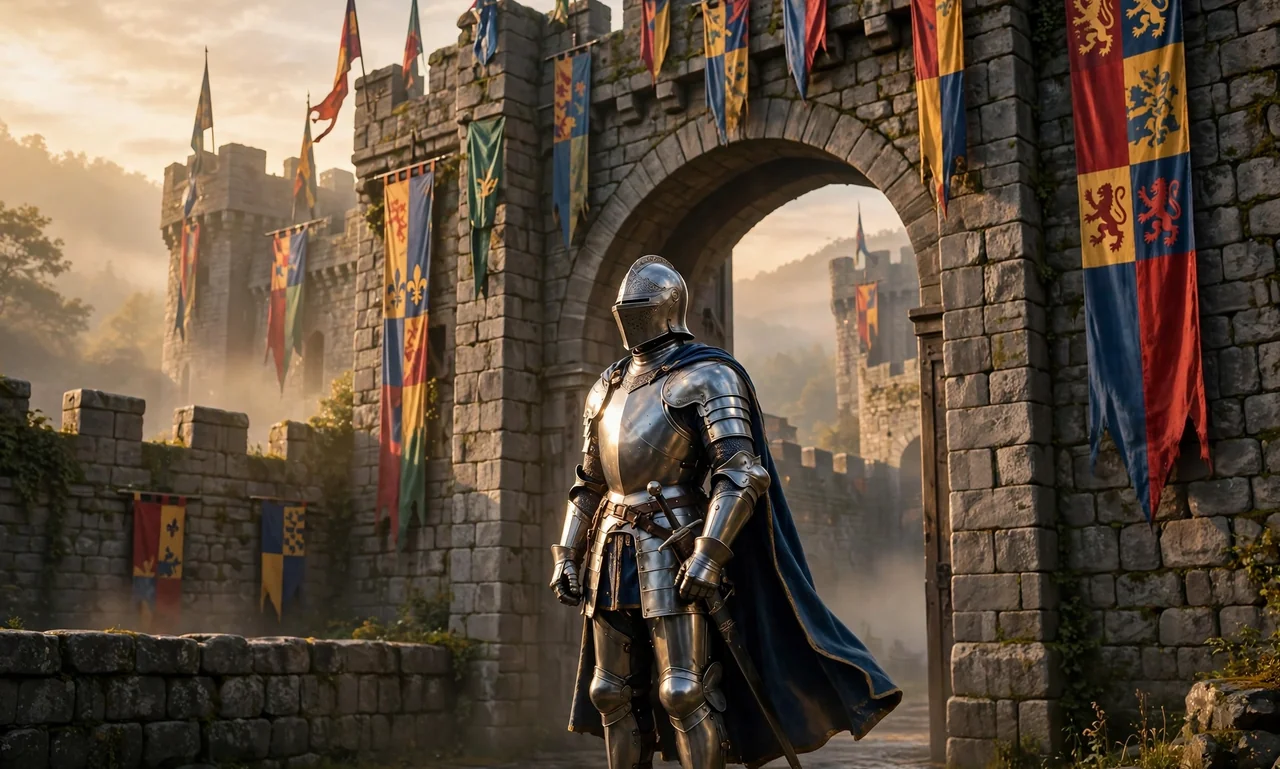
The virtues attached to knighthood are the reason these names still feel powerful. Courage meant facing danger rather than avoiding it. Loyalty meant standing by an oath when breaking it would be easier. Mercy meant sparing a defeated enemy. Courtesy meant treating others, including rivals, with restraint. Honour was the sum of those habits, judged by other people over a lifetime. When you choose a knight name, you are really choosing which of those virtues your character will be tested on.
Knight Names for Courage and Honour
Courage names suit characters who charge first, speak plainly, and refuse to look away from a hard choice. Use them for heroes, for rivals who earn respect, and for older knights whose reputation was built long before the story begins. The notes below point to the exact kind of bravery each name suggests, because reckless courage and steady courage are not the same character.
| Knight Name | Short Note |
|---|---|
| Bramwell Oathheart | Suits a hero who keeps difficult promises. |
| Cassian Boldmarch | Suits a commander leading a risky advance. |
| Darian Trueblade | Suits an honest champion in single combat. |
| Fenwick Steadfast | Suits a knight who holds under pressure. |
| Garran Lionward | Suits a proud protector of the weak. |
| Haldor Brightshield | Suits a rallying figure on a battlefield. |
| Ivo Fairmarch | Suits a just knight settling disputes fairly. |
| Jorand Highheart | Suits an idealist who inspires younger soldiers. |
| Kaelor Valiantmarch | Suits a daring leader of a vanguard. |
| Lysander Bravehold | Suits a defender refusing to surrender ground. |
| Merrick Dauntless | Suits a fearless scout facing unknown danger. |
| Osric Boldhelm | Suits a veteran known for bold charges. |
| Perrin Stoutheart | Suits a dependable knight in long campaigns. |
| Rorick Stoutward | Suits a stubborn guardian of a pass. |
| Selwyn Honourmarch | Suits a knight judged by strict principles. |
Knight Names for Guardians and Defenders
Guardian names belong to characters whose job is to stay, not to chase glory. A castle guard, a border warden, a bridge keeper, or a town watch captain needs a name that sounds patient, watchful, and hard to move. These names work especially well for supporting characters, because readers instantly understand why such a knight is still at a post long after more restless heroes have ridden away.
| Knight Name | Short Note |
|---|---|
| Aveline Wallward | Suits a calm commander of city walls. |
| Bastien Gateward | Suits a strict keeper of a fortress gate. |
| Callan Moatward | Suits a watchful guard of water defences. |
| Delfina Castlewatch | Suits a sharp-eyed tower sentinel. |
| Emrys Towerhold | Suits a lone keeper of a high tower. |
| Falkner Bastion | Suits a solid defender of outer fortifications. |
| Gisela Rampart | Suits a tireless organiser of wall defences. |
| Hobart Keepward | Suits a loyal keeper of the inner keep. |
| Isenbard Wallhold | Suits a veteran of long sieges. |
| Jorunn Shieldgate | Suits a shield-bearer at a narrow gate. |
| Katrin Bulwark | Suits a steadfast protector of a harbour town. |
| Lothar Gatekeep | Suits a stern guardian of a mountain pass. |
| Mirelle Havenward | Suits a gentle guardian of a safe harbour. |
| Nils Fortward | Suits a practical commander of a border fort. |
| Odessa Bastionwatch | Suits a vigilant watcher over a frontier stronghold. |
Knight Names for Questing Heroes
A questing knight is defined by movement. This character leaves home, follows a road, crosses a border, and keeps going when the map runs out. Names in this group therefore sound lighter and more restless than guardian names. They suit wandering heroes, messengers, seekers, and characters whose story is about what they find rather than what they defend.
| Knight Name | Short Note |
|---|---|
| Beren Questward | Suits a determined seeker of a lost relic. |
| Caspian Roadward | Suits a well-travelled messenger knight. |
| Delia Wayfarer | Suits a wandering knight helping roadside villages. |
| Eamon Journeyward | Suits a patient traveller on a long mission. |
| Fiora Pathward | Suits a guide through dangerous mountain trails. |
| Galen Wanderhold | Suits a roving knight with no fixed home. |
| Hester Trailward | Suits a tracker following a faint trail. |
| Ilian Farward | Suits a knight riding beyond known maps. |
| Jorrel Waymark | Suits a scout marking safe routes ahead. |
| Katya Pilgrimward | Suits a devout traveller protecting fellow pilgrims. |
| Lorcan Farstride | Suits a tireless rider covering great distances. |
| Mireya Roadwatch | Suits a guardian of trade roads and travellers. |
| Nestor Trailhold | Suits an experienced guide for young questers. |
| Orin Questhold | Suits a stubborn seeker refusing to turn back. |
| Petra Wayward | Suits an independent knight choosing her own road. |
Knight Names for Oathbound Orders
Order names carry the weight of an institution. A character with an order-style name is not acting alone. Behind the name stands a rule, a badge, a house, and brothers or sisters in arms who will judge the character by the same oath. Use these names for paladin-like figures, temple guards, and knights whose central conflict is loyalty to a code versus loyalty to a friend.
| Knight Name | Short Note |
|---|---|
| Adelina Oathward | Suits a disciplined novice of a sacred order. |
| Cassia Vowkeep | Suits a keeper of an order’s sacred promises. |
| Damaris Oathhold | Suits a senior sister enforcing order discipline. |
| Evander Swornward | Suits a sworn protector of a temple. |
| Fintan Vowward | Suits a quiet monk-knight guarding relics. |
| Hannelore Vowhold | Suits a steadfast commander of an order house. |
| Ilaria Oathwatch | Suits a watchful guardian of order ceremonies. |
| Justus Swornhelm | Suits a fair judge within a knightly order. |
| Kallista Vowguard | Suits a ceremonial guard of a sacred hall. |
| Marcien Oathmarch | Suits a marching leader of an order column. |
| Mathea Swornward | Suits a healer-knight serving an order hospital. |
| Nerissa Oathkeep | Suits a record-keeper of sworn oaths. |
| Paloma Vowwatch | Suits a peaceful sentinel of a pilgrim shrine. |
| Quillon Oathward | Suits a young knight newly sworn to service. |
| Thalassa Oathhold | Suits a revered elder of a holy order. |
Knight Names for Heroines
Heroine names in this guide are not softer versions of hero names. They are built on the same duties: holding a line, leading a charge, keeping an oath, and protecting people who cannot fight for themselves. The difference is only in the character, not in the standard. Give these names to leads, rivals, mentors, and commanders, and let the story show the skill behind the title.
| Knight Name | Short Note |
|---|---|
| Arianwen Swordmaid | Suits a skilled swordswoman leading a household guard. |
| Brianna Lanceward | Suits a confident lancer in tournament and war. |
| Ceridwen Battlemaid | Suits a fierce fighter defending her home valley. |
| Danica Shieldmaid | Suits a shield-wall leader protecting companions. |
| Elenya Swordwatch | Suits a watch captain guarding a town gate. |
| Gwenneth Lancehold | Suits a steady cavalry officer holding formation. |
| Heloise Battleward | Suits a strategist planning a difficult defence. |
| Iona Shieldwatch | Suits a calm sentinel over a coastal road. |
| Jessamine Swordhold | Suits a disciplined duellist with a sharp temper. |
| Kerensa Lanceward | Suits a daring rider charging enemy lines. |
| Linnea Battlewatch | Suits a scout reporting enemy movements early. |
| Melisande Shieldhold | Suits a protector shielding refugees on the road. |
| Nerys Swordward | Suits a determined champion of a small town. |
| Odilia Lancewatch | Suits a border rider watching mountain passes. |
| Rhiannon Battlehold | Suits a resolute commander holding a besieged town. |
Knight Names for Tournament Champions
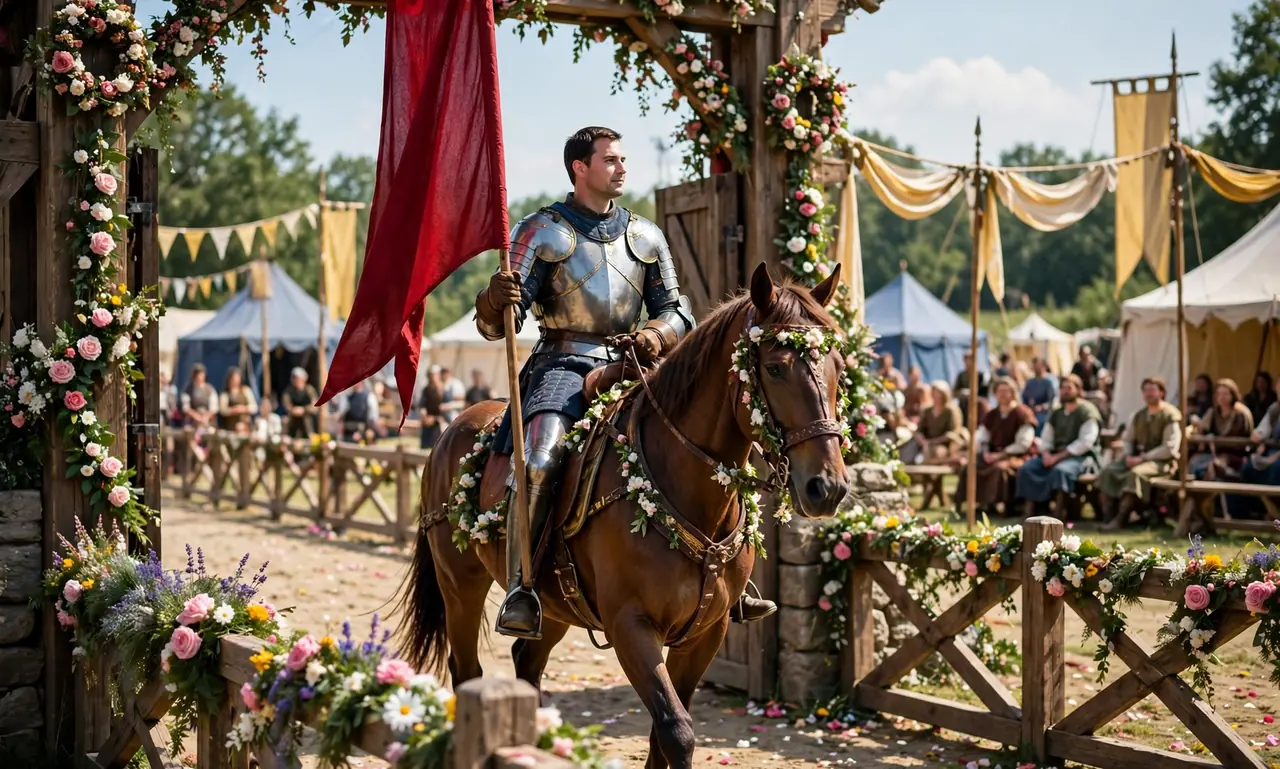
Tournament names belong to the arena. A tournament knight fights for honour, for a prize, and for the crowd, which makes these characters natural showmen, rivals, and crowd favourites. Their names should sound like something a herald could announce loudly without stumbling, and like something spectators would chant after a good bout.
| Knight Name | Short Note |
|---|---|
| Alastair Tourneyward | Suits a seasoned champion of many tourneys. |
| Beaumont Joustward | Suits a polished jouster loved by crowds. |
| Cillian Tiltward | Suits a precise rider in the tilt yard. |
| Dunmore Championward | Suits a defending champion awaiting challengers. |
| Falco Lancechamp | Suits a fast lancer winning early bouts. |
| Harcourt Tourneyhold | Suits a proud holder of a tourney title. |
| Ignatius Jousthold | Suits a fiery rival seeking a rematch. |
| Jarvis Championhold | Suits a strong contender in melee contests. |
| Kerrigan Tiltguard | Suits a careful rider protecting a lead. |
| Leandra Tourneywatch | Suits a rising challenger studying rival champions. |
| Montague Joustward | Suits a noble jouster from a wealthy house. |
| Norbert Championward | Suits a good-humoured favourite of the stands. |
| Reynard Tiltward | Suits a cunning rider exploiting small openings. |
| Tybalt Championmarch | Suits a dramatic champion entering the lists. |
| Verena Tourneyhold | Suits a graceful champion winning with control. |
Knight Names from Castles and Kingdoms
Place-based names give a character a home before the character speaks. A knight from a hall, a castle, or a realm carries that place into every scene, which helps readers remember who owes loyalty to whom. Use these names for nobles, for heirs, for exiles who still name their lost home, and for knights whose story is really about returning to a place.
| Knight Name | Short Note |
|---|---|
| Ardmore Hallward | Suits a steward-knight of a great hall. |
| Calder Hallhold | Suits an heir defending a family seat. |
| Dunhaven Castleward | Suits a commander of a coastal castle. |
| Elmsworth Kingdomward | Suits a royal guard serving the crown. |
| Farnsworth Hallwatch | Suits a watchful keeper of an estate. |
| Glenmore Realmward | Suits a warden of a wide valley realm. |
| Haverford Castlehold | Suits a castellan holding a key fortress. |
| Kilmarin Realmward | Suits a guardian of a remote northern realm. |
| Lindenhall Castleward | Suits a courteous knight of a court castle. |
| Morven Kingdomhold | Suits a loyal holder of a royal border. |
| Norfield Hallward | Suits a practical knight managing northern lands. |
| Ostwick Realmwatch | Suits a sentinel watching an eastern frontier. |
| Pendleton Castlewatch | Suits a patient watcher over a hill castle. |
| Quenby Hallhold | Suits a young heir learning to govern. |
| Somerfield Realmward | Suits a cheerful warden of fertile southern lands. |
Short and Strong Knight Names
Short names are useful when a character appears often, when dialogue moves quickly, or when a game needs a name that is easy to type and remember. A single strong syllable or two can carry as much authority as a long title, provided the character behind it earns that authority in the story. These names also pair well with a longer title or place name added later.
| Knight Name | Short Note |
|---|---|
| Brev | Suits a blunt, no-nonsense young knight. |
| Cale | Suits a calm rider with steady hands. |
| Dren | Suits a tough scout from rough country. |
| Fenn | Suits a marshland warden guarding causeways. |
| Galt | Suits a stocky fighter in close combat. |
| Harl | Suits a hardy veteran of border wars. |
| Iver | Suits a quiet archer-knight watching ridgelines. |
| Joss | Suits a quick-witted squire turned knight. |
| Kell | Suits a disciplined captain of a small company. |
| Lorn | Suits a solitary knight guarding a lonely road. |
| Merr | Suits a cheerful knight lifting tired companions. |
| Noll | Suits a careful planner before every battle. |
| Quin | Suits a sharp-eyed scout reporting dangers early. |
| Sarn | Suits a stern knight holding a river ford. |
| Tarn | Suits a mountain knight guarding high passes. |
When and Why to Use Each Type of Knight Name
Choosing a name type is really choosing a story job. A courage name promises action and a public test, so it fits a hero who must prove something in front of others. A guardian name promises patience, so it fits a character who protects a place while the main plot moves elsewhere. A quest name promises travel, so it fits a character whose growth comes from leaving home rather than defending it.
Order names work differently again, because they bring a community with them. A knight of an order can be judged, rewarded, or punished by that order, which creates conflict without needing a villain. If your character’s hardest choice is between a friend and a rule, an order name makes that tension visible from the first introduction. If the character has no institution behind them, a plainer name will feel more honest.
Tournament names suit stories set in peacetime, at festivals, or in the early chapters before real war begins. They let a writer show skill, rivalry, and reputation in a controlled setting, and they let a reader learn who is dangerous before lives are at stake. Place-based names, by contrast, anchor a character to a home, a family, or a lost kingdom, and they work best when loyalty to that place will be tested later.
Short names are the practical choice for games and for fast dialogue. When a name will be typed, shouted, or repeated dozens of times, length becomes a burden. A short name also leaves room for a title, a place, or an epithet to be added later, once the character has earned one. That growth, from a plain name to a name plus a deed, is one of the most satisfying arcs a knight character can have.
How to Choose the Right Knight Name
Start with the character’s job, not with a sound you happen to like. Ask what the knight protects, what oath binds them, and what failure would cost them. A border guard, a temple sentinel, and a tournament champion need different names, even if all three carry a sword, because their daily duties and their temptations are completely different.
Next, test the name aloud with its title. Say it as a herald would, as a friend would in a hurry, and as an enemy would in anger. If the name stumbles in any of those three voices, it will stumble for readers too. This sound test matters more than clever spelling, because a name that looks impressive on a page can still feel awkward when spoken in a game session.
Then check the name against the rest of your cast. If two major characters have similar sounds, similar lengths, or similar endings, readers will confuse them in fast scenes. Give each knight a distinct rhythm, and keep the most important character’s name the easiest to remember. Supporting knights can carry longer, more ornate names, because they appear less often.
Consider the party or cast around the knight as well. A knight who rides beside a bow-wielding companion needs a name that feels grounded and martial rather than magical, and comparing the two roles helps keep the group balanced. For that fellow martial role, see these archer names and notice how a ranged fighter’s name leans toward precision and patience rather than a knight’s oath and charge.
If your world includes magic, decide how close the knight stands to it. Some knights guard against magic, some work alongside it, and some carry a quiet blessing of their own. A knight who travels with spellcasters may need a plainer, steadier name to anchor the group, and browsing druid names can clarify that contrast, since nature magic suggests growth and wildness where knighthood suggests order and vows.
A darker contrast can sharpen a knight even further. A knight defined by an oath looks clearer beside a figure defined by bargains, curses, or forbidden power, and that tension often drives the best scenes. To test that contrast, compare your knight with warlock names, where the sound alone warns readers that power there comes at a price a knight would refuse to pay.
Finally, test the knight against a stealth warrior for the same reason. A knight fights openly, under a banner, and answers for every blow, while a shadow fighter wins by never being seen. Reading ninja names beside your knight list will show whether your knight still sounds honourable and public, or whether the two roles have started to blur.
How to Invent Your Own Knight Name
Inventing a knight name gets simpler once you assemble it from separate pieces rather than waiting for inspiration. Begin with a personal name that feels at home in your world, whether it is short and blunt or long and courtly. The personal name is the part other characters will use in conversation, so it should be pronounceable, memorable, and distinct from the other personal names in your cast.
Add a second element that states the knight’s duty, place, or virtue in plain language. Duty words point to guarding, watching, holding, or marching. Place words point to a gate, tower, bridge, hall, realm, or border. Virtue words point to courage, honour, loyalty, or mercy. Pick only one of those three directions for a single name, because a name that tries to say everything at once usually says nothing clearly.
Then personalise the result with a detail from the character’s life. A knight who failed once might carry a humbler second element than a knight who has never lost. A knight who guards a river might carry a water or crossing word, while a knight who lost a home might carry the name of that place as a reminder. The detail does not need to be explained at once. It only needs to be true in your notes, so the name grows more meaningful as the story reveals it.
Test the invented name the same way you tested the names in this guide. Say it with a title, shorten it to a nickname a friend might use, and write it in a sentence where the knight is doing something ordinary, such as eating, waiting, or repairing armour. If the name still sounds like a person rather than a costume in that ordinary sentence, it is ready to use.
Knight Names to Avoid
Avoid names that promise a character the story never delivers. A grand, terrifying name attached to a timid beginner will confuse readers, and a gentle name attached to a ruthless villain will feel like a joke unless that mismatch is deliberate. Match the weight of the name to the weight of the character’s actions, especially in the first chapters.
Avoid names borrowed from famous franchises, real celebrities, or other writers’ signature characters. Those names carry memories that are not yours, and readers will spend the first pages wondering whether the borrowing is a tribute, a coincidence, or a mistake. Original names, even simple ones, give your character a clean start and keep your world feeling like its own place.
Avoid modern slang, jokey spellings, and names that are hard to pronounce without a guide. A name that needs an explanation every time it appears will slow every scene, and a name that sounds like a modern nickname will break the mood of a medieval or fantasy setting. When in doubt, choose the clearer, older-sounding option, and let the character’s deeds make the name memorable.
Avoid giving every knight in a group the same pattern. If all your knights end with the same word, or all carry the same kind of place name, the group will blur into one voice. Vary the second elements, vary the lengths, and reserve the most striking pattern for the character who most needs to stand out.
FAQs About Knight Names
What are knight names?
Knight names are character names that suggest honour, courage and service in a medieval or fantasy setting. They work for stories, games and roleplay because they signal a protector, a champion or a sworn guardian at once.
What makes a good knight name for a story?
A good knight name sounds honourable, fits the character’s duty, and is easy to say aloud with a title. Knight names work best when sound, job and virtue all point the same way, so readers grasp the character quickly.
Can knight names work for female characters?
Yes, knight names work just as well for heroines, commanders and mentors as for heroes. The best knight names for women are built on duty, skill and oath, not on softened versions of a hero’s name.
Are knight names good for tabletop games?
Yes, knight names are ideal for tabletop games because they are easy to announce, easy to remember, and quick to connect with a role. A clear knight name helps other players understand your character before the first dice roll.
Should I use a historical or a fantasy knight name?
Use a historical style when your setting is grounded in real medieval life, and a fantasy style when your world has its own orders, realms and magic. Knight names should match the world around them, not fight against it.
How do I create my own knight name?
Start with a personal name, add one duty, place or virtue element, then test it aloud with a title. Original knight names built this way feel personal, stay pronounceable, and avoid borrowing another writer’s famous character.
What is the best short knight name style?
The best short knight name style uses one strong, easy-to-say personal name that still sounds martial and honourable. Short knight names suit frequent dialogue, fast games, and characters who earn longer titles later.
Conclusion
Knight names work because they carry a promise. They promise a character who can fight, who answers to a code, and who protects something larger than themselves. The names in this guide are built to keep that promise in different ways, whether the character guards a gate, rides a long road, serves an order, or enters a tournament to prove a point.
Choose by duty first, test the name aloud, and check it against your other characters. When the name, the job, and the virtue all agree, readers will remember the knight long after they forget the plot details. If you want the broader historical background behind that promise, the general history of knighthood is a useful next read, and you can learn more from the Knight article on Wikipedia.
Final Thoughts
The right knight name is the one that still feels true after the character has failed, waited, and kept going anyway. Pick a name that fits the duty, not just the battle, and let the character earn the rest of the title through choices readers can respect. Keep the name simple enough to remember, strong enough to announce, and honest enough to match the deeds that follow it. With 130 original knight names above, organised by courage, guardianship, quest, order, and realm, you have a strong starting point for a hero, a rival, or a loyal companion who will be remembered.