
Finding strong warlock names takes more than picking the darkest word you can spell, because a warlock is defined by a bargain rather than by a spellbook alone. The best warlock names hint at that bargain: what was promised, what was paid, and what kind of power now answers when the character calls. A name that only sounds evil will fade after the first session, while a name that suggests a story will keep working every time it is spoken at the table or on the page.
In older usage, the word warlock carried a much harder edge than it does in most modern games. It comes from the Old English word wǣrloga, meaning an oath-breaker or deceiver, and in early modern Scotland it came to mean a man accused of witchcraft, often understood as someone who had broken faith through a pact. Modern fantasy kept the pact and softened the history, turning the warlock into a spellcaster who trades something precious for power from a patron. That shift is useful for naming, because it gives you three ready sources of inspiration: the patron, the price, and the personality that made the deal in the first place.
This guide gives you 110 original warlock names, grouped by the kind of pact and magic behind them, so you can match the name to the character instead of scrolling through an endless mixed list. Every entry carries a short note about the character it suits best, and the later sections explain how to choose, how to invent your own, and which naming traps to avoid. Whether you are building a Dungeons and Dragons character, a Baldur’s Gate 3 hero, a World of Warcraft alt, or a figure in a novel, start with the group that matches your patron and narrow from there.
Table of Contents
- Quick Picks
- Warlock Lore Across Fantasy Traditions
- What Makes a Great Warlock Name
- Pact-Bound Warlock Names
- Eldritch and Otherworldly Warlock Names
- Necromantic Warlock Names
- Hex and Curse Warlock Names
- Celestial and Starbound Warlock Names
- Fey-Touched Warlock Names
- Infernal Warlock Names
- Short and Punchy Warlock Names
- When and Why to Use Each Warlock Name Type
- How to Choose the Right Warlock Name
- How to Invent and Personalize Your Own Warlock Name
- Pronunciation Guidance
- Warlock Names to Avoid
- Using Warlock Names in DnD, Baldur’s Gate 3 and World of Warcraft
- More Fantasy Names to Explore
- FAQs About Warlock Names
- Conclusion
- Final Thoughts
Quick Picks
Short on time? These ten favourites cover the whole range of this guide, from brooding pact magic to fey trickery and grave whispering, and each one stands alone as a full character name without needing a surname. Pick the one whose note matches your character, then read its full group below for alternatives in the same style.
| Name | Best For |
|---|---|
| Morvain | Suits a brooding pact-bound spellcaster |
| Kethralis | Fits an ancient eldritch pact keeper |
| Obsidelle | Perfect for a dark gem-magic warlock |
| Varnoxil | Ideal for a cunning hex-weaver |
| Selkarith | Suits a moonlit arcane scholar |
| Drelvanna | Fits a grave-whispering necromancer |
| Corvathil | Ideal for a fey-bargain trickster |
| Pyraleth | Suits a flame-pact spellcaster |
| Noctivane | Fits a night-court warlock |
| Grimmaldor | Perfect for a grim infernal commander |
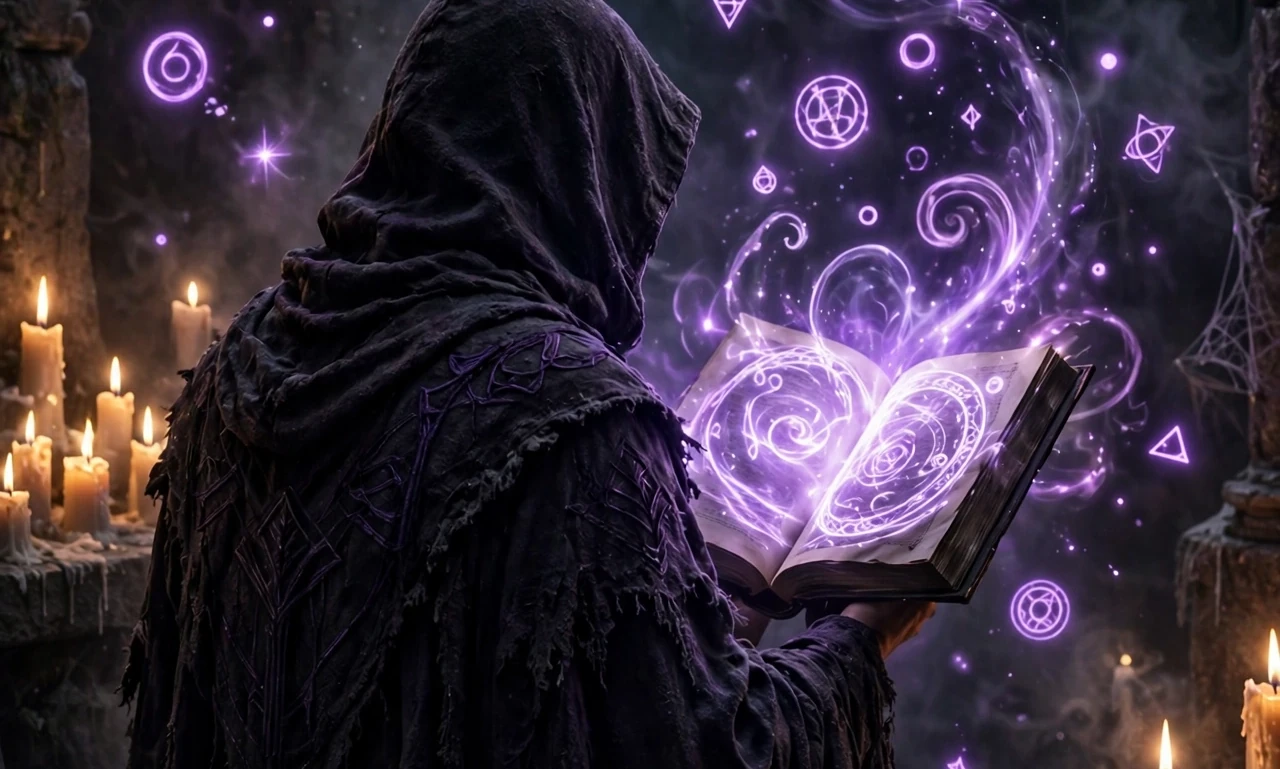
Warlock Lore Across Fantasy Traditions
Warlocks appear in very different forms depending on the tradition you borrow from, and the name should signal which version you mean. In folklore-flavoured stories, a warlock is an outsider figure, someone the village whispers about because their power clearly came from somewhere the neighbours cannot see. Names for this kind of character work best when they sound like ordinary names with one unsettling edge, a familiar first sound followed by a harder ending, rather than a full costume of spikes and skulls.
In tabletop fantasy, the warlock is usually defined by a patron, and the patron is the single most useful naming clue you have. A fiend patron suggests contracts, debts, courts and commands, so names with a formal, almost legal weight fit well. An archfey patron suggests bargains made in riddles, glamour, seasons and debts of gratitude, so lighter, musical names with a sly turn suit better. A Great Old One or other eldritch patron suggests knowledge that damages the mind that holds it, so longer, stranger names with unfamiliar consonant clusters feel right, as long as they stay pronounceable.
Video games add a third tradition, where the name is also a label other players will read quickly. A raid leader or party chat will shorten a long name whether you like it or not, so a game warlock needs a name that survives being clipped to one syllable or one half. Test that shortened form before you commit, because the nickname is the name most people will actually use, and a dramatic full name that collapses into something silly will undermine the character every session.
Across all three traditions, one principle holds steady: the name should raise a question rather than deliver a full biography. A reader or fellow player who hears the name should wonder what the character traded and to whom, not feel they have already been told everything. Leave room for the story to fill in the details, and let titles, reputations and deeds attach themselves later as the character earns them.
What Makes a Great Warlock Name
A great warlock name passes five quiet tests before it ever reaches a character sheet. First, it can be said aloud without stumbling, because a name that only works on paper will slow down every scene of dialogue. Second, it fits the world it belongs to, matching the sounds of nearby place names and other characters instead of clashing with them. Third, it gives the player or writer something to play with, such as a natural nickname, a formal version for ceremonies, and a feared version whispered by enemies.
Fourth, it hints at cost without naming it outright. A name that gestures toward vows, debts, bargains or bindings tells the audience that power here was not free, which is the heart of the warlock idea. Fifth, it stays restrained: one dark or arcane element carries more weight than four piled together, and restraint is what separates a memorable name from a parody. When you test a candidate, read it aloud three times, imagine it shouted across a battlefield, whispered in a tavern, and written in a book of contracts, and keep it only if it holds up in all three settings.
Pact-Bound Warlock Names
These names suit warlocks whose defining feature is the deal itself: oath-keepers, debt-collectors, bargain brokers and enforcers who treat a contract as seriously as a weapon. Use them when the patron matters more than the spell list, and when you want other characters to sense that this person answers to someone, or something, else. They work especially well for lawful-leaning warlocks, court intriguers, and characters whose backstory turns on a single decision they cannot undo.
| Name | Best For |
|---|---|
| Malachar | Suits a warlock bound by sacrifice |
| Tormundel | Fits a stern bargain-keeper |
| Kessarion | Ideal for a debt-collecting pact mage |
| Brannokh | Suits a rugged oath-sworn warrior-mage |
| Velmorath | Fits a calculating fiend-pact noble |
| Ildravin | Ideal for a patient bargain negotiator |
| Zevranth | Suits a daring pact gambler |
| Oskarnel | Fits a solemn covenant guardian |
| Durnival | Ideal for a grim deal-maker |
| Halvethor | Suits a towering pact enforcer |
| Mordelain | Fits a scheming bargain broker |
| Quessindor | Ideal for a secretive oath-holder |
| Thalveron | Suits a regal pact lord |
| Rennovar | Fits a restless bargain seeker |
| Yssandra | Ideal for a persuasive pact whisperer |
Eldritch and Otherworldly Warlock Names
Eldritch names belong to warlocks who draw power from beings, places or knowledge that ordinary minds were never meant to hold. They suit star-gazers, void scholars, dream oracles and cult heralds, and they should sound slightly unfamiliar without becoming unpronounceable. Keep the strangeness in one place, either an unusual opening, an unexpected consonant pair, or a long rolling ending, and let the rest of the name stay grounded so listeners can still repeat it after hearing it once.
| Name | Best For |
|---|---|
| Xaluthar | Suits a star-mad void scholar |
| Qorveth | Fits a whisper-hearing deep seer |
| Ilthiss | Ideal for a tentacled horror servant |
| Voonthala | Suits a dream-haunted oracle |
| Ezmerath | Fits a forbidden tome reader |
| Kthovane | Ideal for a nameless deep herald |
| Olmystra | Suits a mist-shrouded aberration caller |
| Yrgalith | Fits a star-charting void mage |
| Nemorith | Ideal for a sanity-testing prophet |
| Ssarvok | Suits a serpent-voiced cult leader |
| Ulvarith | Fits a deep-sea pact dreamer |
| Zentholar | Ideal for a cosmic riddle keeper |
| Vorxxil | Suits a chaotic aberration trickster |
| Drezzan | Fits a void-touched wanderer |
| Thirzull | Ideal for a whispering star servant |
Necromantic Warlock Names
Necromantic warlocks bargain with death, memory and the restless dead, so their names should feel patient, quiet and old rather than loud. These suit soul keepers, tomb guardians, funeral-rite casters and battlefield harvesters, and they work best when the character’s manner is calm, because a soft voice delivering a grave name is far more unsettling than shouting. Avoid giving such a character a cheerful or bouncy name unless the contrast is a deliberate part of the story.
| Name | Best For |
|---|---|
| Gravemara | Suits a cemetery-bound soul keeper |
| Mortivane | Fits a patient death scholar |
| Ulphric | Ideal for a bone-calling ritualist |
| Vexmor | Suits a corpse-whispering grave mage |
| Dalloreth | Fits a tomb-guarding warlock |
| Ghastrel | Ideal for a spirit-binding medium |
| Ossivelle | Suits a bone-carving death artist |
| Carrionel | Fits a battlefield soul harvester |
| Sepulvar | Ideal for a crypt-dwelling necromancer |
| Mournith | Suits a grief-powered soul mage |
| Pallidora | Fits a pale funeral-rite keeper |
| Exhumara | Ideal for a grave-robbing pact mage |
Hex and Curse Warlock Names
Hex warlocks are the ones people blame when luck turns, crops fail, or a rival suddenly cannot sleep, and their names should carry that sharp, personal edge. These fit jinx weavers, vengeance seekers, grudge keepers and village outcasts whose power is feared precisely because it feels targeted. A good hex name sounds like something muttered under breath, short enough to be spoken as a warning and pointed enough to feel aimed at one person rather than at the world.
| Name | Best For |
|---|---|
| Maledrix | Suits a sharp-tongued curse caster |
| Hexalor | Fits a trap-setting jinx weaver |
| Jinxara | Ideal for a mischievous bad-luck mage |
| Cursevane | Suits a vengeance-driven hexer |
| Blightmor | Fits a withering curse bearer |
| Spitewyn | Ideal for a bitter grudge keeper |
| Hexvanna | Suits a sly potion-curse mixer |
| Doommara | Fits a doom-foretelling warlock |
| Banewick | Ideal for a feared village hexer |
| Scornelle | Suits a cutting insult mage |
| Witheryn | Fits a decay-spreading spellcaster |
| Malifex | Ideal for a precise curse craftsman |
Celestial and Starbound Warlock Names
Not every warlock bargains with darkness, and celestial warlocks prove it: their patrons may be stars, moons, dawn light or wandering cosmic powers, and their names should feel bright without losing mystery. These suit constellation readers, moon-phase casters, sky oracles and sun-blessed wanderers, and they work well for warlocks who are allies rather than villains. Keep the light in the name tempered with distance, because a star is beautiful partly because it cannot be touched.
| Name | Best For |
|---|---|
| Astrivelle | Suits a starlight pact dreamer |
| Lunovar | Fits a moon-phase spellcaster |
| Solmaran | Ideal for a sun-blessed warlock |
| Stellanor | Suits a constellation-reading mage |
| Novariel | Fits a newborn-star herald |
| Comethelle | Ideal for a wandering sky mage |
| Galvanna | Suits a galaxy-gazing oracle |
| Tenebrelle | Fits a twilight-sky warlock |
| Aurorelle | Ideal for a dawn-light mage |
| Cosmarin | Suits a cosmos-wandering pact mage |
| Lyranth | Fits a star-song spellcaster |
| Nebulora | Ideal for a nebula-born dreamer |
Fey-Touched Warlock Names
Fey-touched warlocks made their bargain with courts, groves and trickster powers that keep promises in the letter while breaking them in spirit, so their names should sound beautiful with a catch. These fit glamour weavers, court schemers, grove guardians and wild pranksters, and they benefit from musical endings and soft consonants that make the danger easy to underestimate. A fey name that sounds too harsh loses the point, because the threat of the fey is that the invitation sounds lovely.
| Name | Best For |
|---|---|
| Briarwyn | Suits a woodland bargain trickster |
| Faelindra | Fits a glamour-weaving courtier |
| Wylderin | Ideal for a wild magic prankster |
| Glimmeryn | Suits a sparkling illusion mage |
| Mosselle | Fits a forest-floor spellcaster |
| Tindlevar | Ideal for a mischievous court jester-mage |
| Elderwyn | Suits a timeless fey elder |
| Fernelle | Fits a quiet grove guardian |
| Willovane | Ideal for a willow-shaded enchanter |
| Courtelle | Suits a scheming fey courtier |
| Rowanelle | Fits a protective grove mage |
| Lullivelle | Ideal for a sleep-spell songstress |
Infernal Warlock Names
Infernal warlocks serve devils, pit courts and hellfire powers, and their names should carry authority, heat and a sense of contract law turned into magic. These suit commanders, spies, contract agents and enforcers who treat every conversation as a negotiation with fine print. Give an infernal warlock a name that sounds confident in a throne room, because these characters win as often with a signature as with a spell, and their reputation should arrive before they do.
| Name | Best For |
|---|---|
| Infernara | Suits a hellfire pact commander |
| Brimvane | Fits a smouldering pit mage |
| Sulphor | Ideal for a brimstone ritualist |
| Diabolin | Suits a silver-tongued devil agent |
| Scorchvane | Fits a flame-wielding warlock |
| Malphor | Ideal for a ruthless contract devil |
| Demorath | Suits a demon-court noble |
| Pitvara | Fits a pit-born enforcer |
| Charvanna | Ideal for a charming infernal spy |
| Smoldara | Suits a slow-burning fire mage |
| Ignivar | Fits a spark-igniting pact mage |
| Vilemar | Ideal for a cruel bargain lord |
Short and Punchy Warlock Names
Short names earn their place when speed matters: chat messages, initiative calls, shouted orders and book covers all favour a name that lands in one beat. These one-syllable options suit rogues, fighters with a pact, messengers and any warlock who needs to be remembered after a single mention. Pair a short name with a title later, such as a place, a deed or a patron’s mark, so the character gains weight over time without losing the punch of the original name.
| Name | Best For |
|---|---|
| Krix | Suits a sharp cunning spellcaster |
| Volm | Fits a heavy-voiced pact mage |
| Nyss | Ideal for a quiet night mage |
| Quor | Suits a blunt bargain keeper |
| Zelk | Fits a restless hex caster |
| Thrix | Ideal for a sly trickster mage |
| Orv | Suits a grim silent warlock |
| Pex | Fits a cheeky curse prankster |
| Grix | Ideal for a bold pact fighter |
| Ulm | Suits a deep-voiced ritualist |
When and Why to Use Each Warlock Name Type
Choose pact-bound names when the story turns on obligation: a character who must report to a patron, collect a debt, or keep a vow they regret will feel truer with a formal, weighty name. Choose eldritch names when the horror is knowledge itself, such as a scholar who read the wrong book or a sailor who heard something beneath the waves, because strangeness in the name prepares the audience for strangeness in the character. Choose necromantic names when death is a daily workplace rather than a threat, such as a mortuary keeper, a battlefield medic of souls, or a guide for the newly dead.
Choose hex and curse names when the character’s power is personal and aimed, not grand and cosmic, because a curse lands differently when it has a target and a reason. Choose celestial names when the warlock is a guide, a healer of sorts, or a moral counterweight in a dark party, since brightness in the name signals that this bargain did not corrupt the bearer. Choose fey-touched names when bargains are playful, seasonal and treacherous all at once, and choose infernal names when the character operates like a lawyer, a spy or a commander in a hierarchy that rewards ruthlessness. Short names fit any of these types when the character needs to be called quickly, and they pair well with a longer title earned later.
How to Choose the Right Warlock Name
Choosing well is a short process, not a guess, and it works best in a fixed order so that taste does not override story. Start with the patron, then the price, then the personality, and only then the sound, because a beautiful name that contradicts the patron will confuse every reader who meets the character. A name chosen in that order will usually feel inevitable once it is in place, while a name chosen for sound alone often needs constant explanation to make sense.
Step 1: Name the Patron First
Write one sentence about who or what grants the power, even if the character does not know the full answer yet, and let that sentence narrow the group for you. A devil suggests the infernal or pact-bound groups, a fey court suggests the fey-touched group, and an unknowable deep power suggests the eldritch group, so this single choice removes most of the list at once and prevents the common mistake of picking a name from the wrong tradition entirely.
Step 2: Name the Price Second
Write one sentence about what the character gave up, owes, or fears losing, and check whether the candidate name gestures toward that cost without stating it plainly. A name that hints at debts suits a character still paying, a name that hints at whispers suits a character still listening, and a name that hints at courts suits a character still answering to a hierarchy, so the price becomes a filter rather than a detail you add later.
Step 3: Test Sound, Shortening and Setting
Say the shortlist aloud, shorten each name the way friends and enemies would, and place each one beside the names of the party, the town and the patron to check for clashes. Drop any name that duplicates a nearby character’s sound, any name that shortens into a joke you do not want, and any name that sounds like it belongs in a different genre, because those problems only grow louder once the campaign or story is underway.
How to Invent and Personalize Your Own Warlock Name
Invention works best as a recipe rather than a lightning strike, and the recipe has four ingredients you can reuse endlessly. Take a distinctive opening sound, such as a hard consonant pair or an unusual vowel, and join it to a middle syllable borrowed from the patron’s world, whether that world is a court, a grave, a star chart or a forest. Add an ending that sets the tone, such as a rolling vowel ending for fey characters, a hard consonant ending for infernal enforcers, or a whispering sibilant ending for eldritch seers, and then test the result against the sound rules above.
Personalization turns a good invented name into a character-specific one without changing its core. Add a second element that only this character could carry, such as a title earned in play, a place of origin, or a mark of the pact, and use that fuller form only in formal scenes while keeping the short name for everyday use. Change one letter or syllable to honour a fallen ally, a home village, or a patron’s language, and record the reason privately so the name keeps its meaning for you even if no other character ever learns it. Avoid adding apostrophes, extra capitals or accent marks unless your setting already uses them, because decoration that serves no story purpose makes a name harder to type, search and remember.
Pronunciation Guidance
The names in this guide are original inventions, so there is no ancient or authoritative pronunciation to get wrong, and you should treat the guidance here as a suggested reading rather than a historical fact. As a general rule, read each name as it is spelled, give the stressed syllable to the middle of longer names, and keep short names to a single crisp beat. Letter pairs such as th and ch should be read in the ordinary English way, doubled letters should be read as a single sound held slightly longer, and an ending in a vowel should be left open rather than clipped, which keeps fey and celestial names musical and eldritch names flowing.
If a name still trips you up after two readings, simplify your own use of it rather than forcing the full form every time: introduce the full name once in a formal moment, then use the natural shortened form in conversation, exactly as real people do with long names. A name that your group can say confidently will always serve the character better than a technically complete name that everyone avoids, and confidence in pronunciation is what makes a warlock sound powerful when the name is spoken aloud.
Warlock Names to Avoid
Avoid names that promise more than the character can deliver, such as a title disguised as a name for a first-level character who has earned nothing yet, because the gap between name and deed will read as comedy. Avoid stacking several dark words into one name, since each added word weakens the ones before it, and avoid apostrophes and random capitals that exist only to look arcane, as they slow typing and break immersion. Avoid copying a famous fictional warlock, wizard or witch outright, because the audience will hear the original character instead of yours, and avoid using the same name as another player character, a major non-player character, or a nearby place, since confusion in play is almost impossible to undo gracefully.
Avoid also the trap of choosing a name that clashes with the character’s personality for no reason: a gentle healer with a brutal name, or a ruthless enforcer with a delicate one, needs a story reason for the mismatch, and without one the audience will assume a mistake. Finally, avoid names that are difficult to spell from hearing alone if the character will appear in chat, search or written play, because a name that no one can spell is a name that no one can look up, invite or remember after the session ends.
Using Warlock Names in DnD, Baldur’s Gate 3 and World of Warcraft
In Dungeons and Dragons, let the patron choice on the character sheet drive the name group, and tell the dungeon master the short form you expect the party to use so that non-player characters can use it naturally. In Baldur’s Gate 3, favour names that read clearly in dialogue boxes and that you will enjoy hearing in your head across a long campaign, since a name that irritates you in the character creator will irritate you for dozens of hours. In World of Warcraft, check availability early, keep the name short enough to read above a character in combat, and remember that other players will judge the character by the nameplate before they ever see the backstory, so clarity beats complexity there.
For fiction writing, the same groups apply with one extra test: read the name inside a full sentence of narration, not alone on a list, and keep it only if the sentence still flows. A name that works in a list but stalls a sentence will stall every scene it enters, while a name that flows in narration will carry dialogue, description and action without drawing attention to itself. That sentence test is the simplest quality check in this whole guide, and it is worth applying to every finalist before you commit.
More Fantasy Names to Explore
If your warlock leans toward blood, night and old curses, the darker side of the fantasy shelf may suit the same character even better.
For a darker cousin list with the same pact-driven flavour, explore our vampire names collection next.
If your character serves nature, balance and old groves rather than a devil or a deep power, a wilder tradition may fit the story you are telling.
For a nature-bound spellcaster in the same world, explore our druid names collection next.
If your party already has a sworn blade and your warlock needs to stand apart from that martial figure, contrasting the two names will help both characters read clearly.
For the sworn martial counterpart in your party, explore our knight names collection next.
If your warlock fights from range with precision and patience, a fellow ranged tradition may share the character’s temperament even when the magic differs.
For a precise ranged ally in the same party, explore our archer names collection next.
FAQs About Warlock Names
What makes a good warlock name?
A good warlock name sounds speakable, hints at its patron and price, and fits its world without stacking dark words. Warlock names work best when one arcane element carries the whole character.
Should warlock names sound evil?
Warlock names need not sound evil, since patrons range from devils and fey courts to stars and groves. Warlock names should match the patron, not merely sound threatening.
Can warlock names be used for any gender?
Yes, most warlock names suit any gender, because modern fantasy treats the pact, not gender, as defining. Warlock names here avoid gendered endings unless the note suggests otherwise.
How long should a warlock name be?
Two or three syllables suit most warlock names, while longer names need a natural short form for play. Warlock names should survive shortening without losing their character or charm.
Are these warlock names original?
Yes, every warlock name in this guide was invented for this article and checked against competitor lists. Warlock names here carry thematic use notes, never invented meanings or origins.
How do I invent my own warlock name?
Combine a distinctive opening, a patron-inspired middle, and a tone-setting ending, then test it aloud. Warlock names invented this way stay personal, pronounceable, and tied to story.
Can I use these warlock names in games?
Yes, these warlock names suit Dungeons and Dragons, Baldur’s Gate 3, World of Warcraft, and fiction writing. Warlock names should be checked for availability in games before finalizing characters.
Conclusion
The strongest warlock names in this guide share one quality: they point at a bargain without explaining it away, leaving the patron, the price and the personality for the story to reveal. Start from the group that matches your patron, test the shortlist aloud and in a sentence, and keep the name that still feels powerful when whispered, shouted and written in a contract. For the established history behind the word itself, from oath-breaker to pact-bound spellcaster, see the Warlock article on Wikipedia.
Whether your character is a grave whisperer, a fey trickster, a star reader or an infernal agent, the right name will do quiet work in every scene, signalling the deal that made the magic possible. Choose the name that raises the best question about your character, and let the campaign or story spend its time answering it.
Final Thoughts
Warlock names reward patience more than drama, because the best choice is the one that still sounds right after a hundred uses, not the one that shocks on first reading. Pick from the pact group that matches your character, test the name aloud, shorten it honestly, and trust the quieter option when two finalists are close. A warlock name chosen this way will grow with the character, gaining weight from every deed, debt and decision that follows it.
Pingback: 130+ Archer Names That Hit the Mark for Heroes